
What do you find yourself more drawn to? –
Reading about the solar system or walking past Saturn’s rings?
Learning about human anatomy or stepping inside a 3D heart, watching blood flow in real time?
We are not talking about any science fiction here. This is immersive learning in education.
The top schools in Gurgaon have adopted a powerful blend of virtual and augmented reality in education, taking learning far beyond traditional methods.
The Blue Bells School, one of the most progressive schools in Gurgaon, builds thinkers, explorers, & confident learners through interactive, hands-on, and technology-enabled learning.
Let’s first understand what immersive learning truly means and how it supports child growth in today’s world.
What is immersive learning in education?
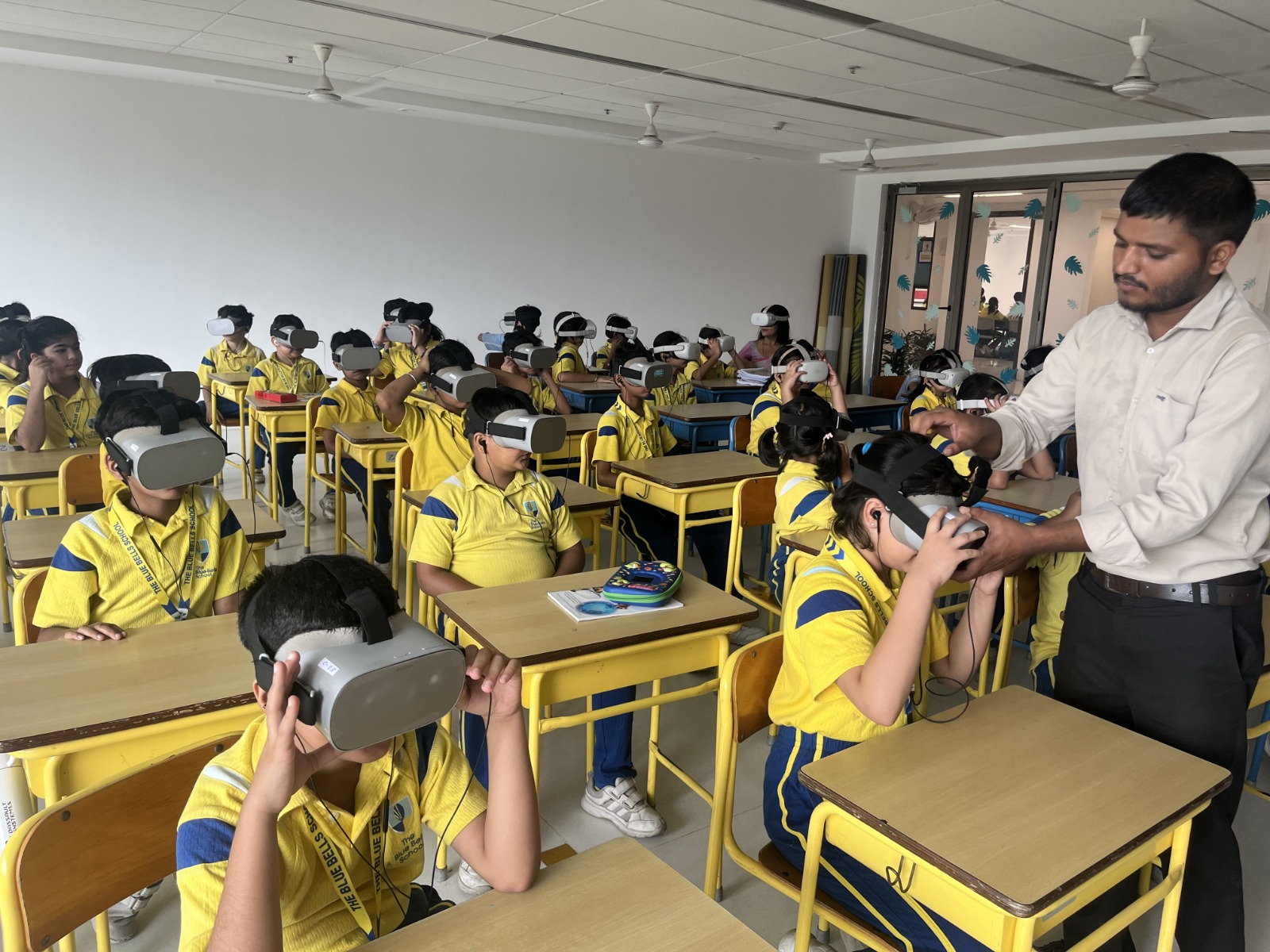
Immersive learning uses educational technology to provide learners with realistic experiences, helping them better grasp the concept. It combines a naturalistic environment, interactive elements, structured activities, performance tracking, & multiplayer capabilities, driving active student engagement.
This learning approach is more engaging than passive methods like lectures & videos. It turns learning into a full experience—almost like the child becomes part of the lesson.
The two superpowers of immersive learning – AR & VR
Immersive learning often uses two major tools: AR and VR. They sound similar, but they work differently.
Augmented Reality (AR)
AR enhances the real world by adding digital elements. Children can view 3D models, animations, and overlays through tablets or smart devices. It enables concept visualisation in the best way possible.
Example – When your child aims a tablet at an animal-related page, a 3D lion emerges on the page, roaring and moving.
Virtual Reality (VR)
VR creates a fully immersive environment. With VR headsets, children can enter a digital world to explore and interact.
Example – Instead of reading about ancient Egypt, your child can virtually “walk” around the pyramids.
Sounds fascinating? When used thoughtfully, AR and VR together can transform how children experience education.
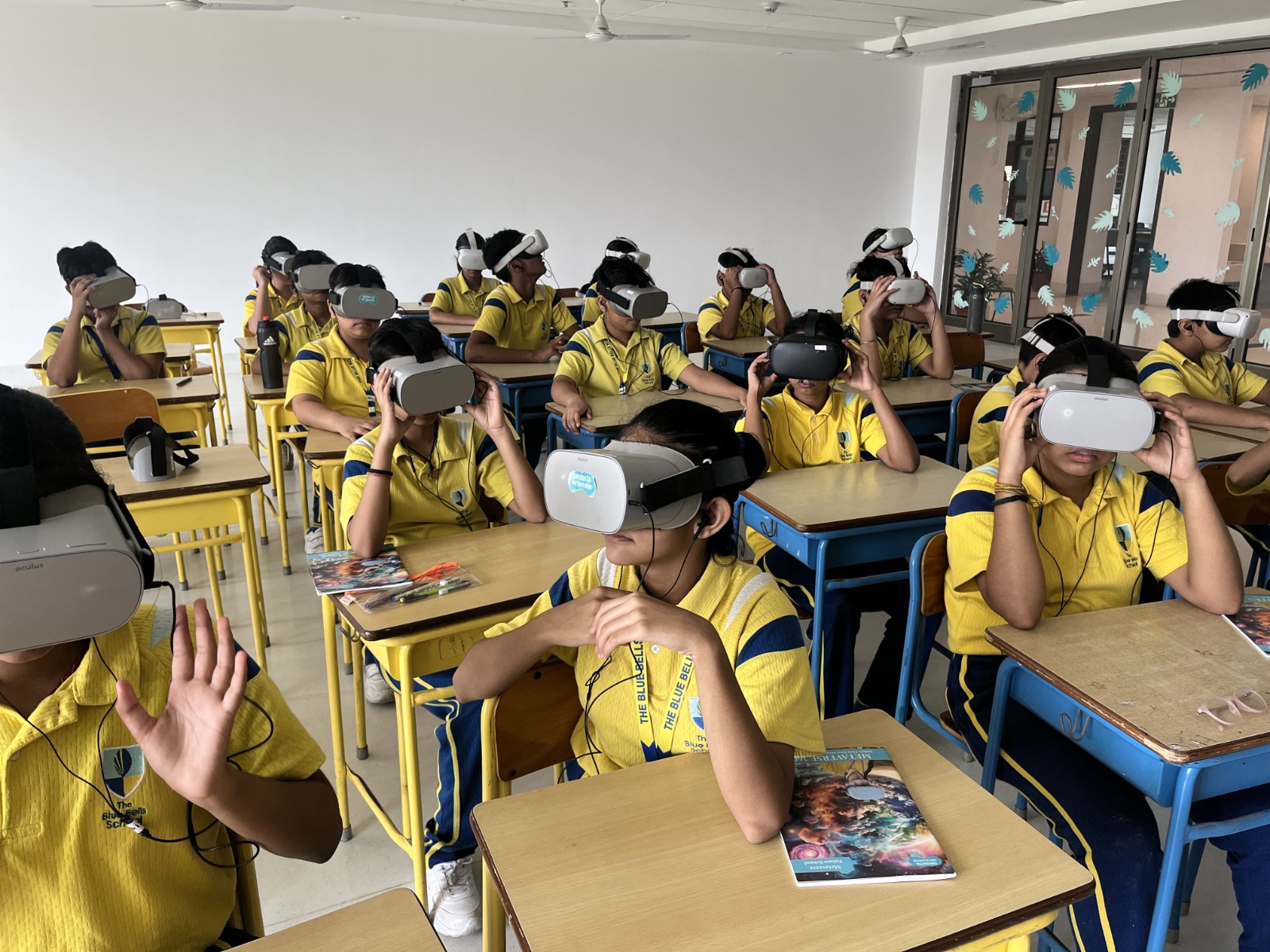
How AR & VR transform learning in the classroom
- Accelerated skill acquisition
Traditional learning sticks to a linear pattern of teach, revise, and test. Immersive learning speeds up this process by enabling students to learn and practice those skills in real time. In VR-based simulations, students can practice concepts without fear of failure, build skills, and improve their confidence.
- Improved retention and recall
Children may not remember ‘what they studied’ but will remember ‘what they experienced.’ AR VR learning enables students to touch, see & feel, creating a strong memory association. This immersive experience helps the brain retain facts far longer than plain information alone.
- Increased engagement and motivation
Children are surrounded by a fast-moving, highly stimulated world, and their attention span is decreasing day by day. AR and VR help combat distractions by providing an out-of-this-world learning experience. It piques children’s curiosity, boosts participation, and encourages them to explore difficult concepts.
- Real-world relevance
Learning without any idea of how those concepts apply in the real world can leave a child feeling lost. Here, immersive learning bridges the gap by connecting classroom concepts with real-world applications. By creating a real-life problem-solving scenario, VR makes learning feel relevant and helps students build stronger interest.
- Personalised learning journeys
Not every child learns at the same pace. AR and VR provide a personalised approach to help each child interact with lessons at their own comfort level. It offers multiple ways to understand the same topic, tracks the learner’s performance, and provides feedback without judgment. This reduces pressure and makes the learning process efficient.
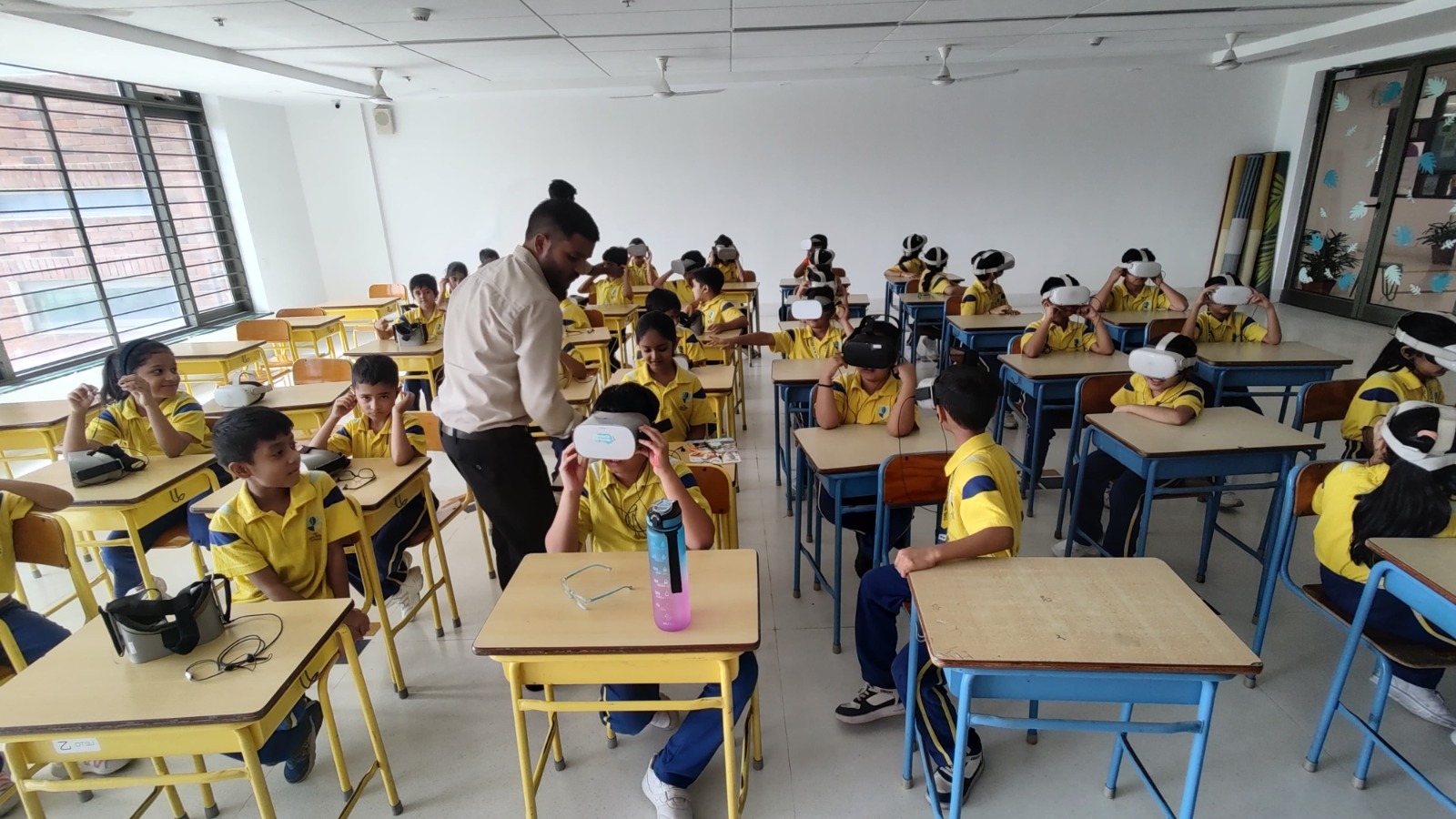
The Blue Bells School’s approach to technology-enabled learning
As one of the most progressive schools in Gurgaon, The Blue Bells School approaches education technology not as a replacement for traditional teaching methods but as an enhancement for deeper understanding.
Their digital classrooms, equipped with smart boards, multimedia tools, and interactive content, take textbook lessons to the next level.
Technology-enabled education helps students to—
- Explore and experience
- Understand cause and effect
- Test scenarios safely
- Learn by doing
Learning has entered a new era
The future belongs to learners who know how to apply concepts in real-world scenarios and drive change in the world. At The Blue Bells Schools, one of the top schools in Gurgaon, they have an integrated learning system that builds confident, curious, & future-ready students through immersive learning. This is called experiential learning at its finest—backed by technology.