

Picture a group of children building a cardboard rocket. One wants it to fly to the moon, another insists it should travel to Mars, and a third has already decided it needs wings. Suddenly, the room buzzes with ideas, opinions, and wonderfully serious negotiations.
This is childhood at its most fascinating: children discovering what they think, finding the confidence to say it and learning that someone else may think differently. These everyday exchanges are valuable opportunities to build communication skills, empathy, and the foundations of healthy social and emotional development.
For parents, helping children navigate these moments is less about teaching them to always agree and more about showing them how to express themselves while making room for other perspectives.

1. Help Them See the Value in Different Opinions
Children don’t have to think alike to learn from one another.
The Panchatantra reminds us of this through the story of the four friends: the crow, mouse, deer and tortoise. Each sees the world differently and brings a different strength to the group. Yet, by listening to one another and combining their perspectives, they overcome challenges.
Children can learn the same lesson in everyday conversations. Encourage them to explain why they think something rather than simply insisting on their way.
“I think differently because…” opens a conversation. It teaches children that having a strong opinion and respecting another person’s opinion can happily coexist.
2. Turn Determination Into Positive Communication
Some children have wonderfully strong personalities. They know what they want, have plenty of ideas and are determined to make themselves heard. What parents may sometimes describe as a stubborn child can also be an opportunity to nurture that determination in a constructive direction.
Instead of asking only, “How do I make my child listen? ”, try asking, “How can I help my child communicate better?”
Give them opportunities to explain their feelings, listen to another viewpoint and reconsider their position when they discover new information.
The aim isn’t to make their personality quieter. It is to help their confidence become more thoughtful and adaptable.
3. Give Them Words That Build Bridges
Knowing what you feel is one thing. Knowing how to express it is another.
Children can practise phrases such as:
- “I have a different idea.”
- “Can you tell me what you think?”
- “I understand your point, but I see it differently.”
- “Let’s find a solution together.”
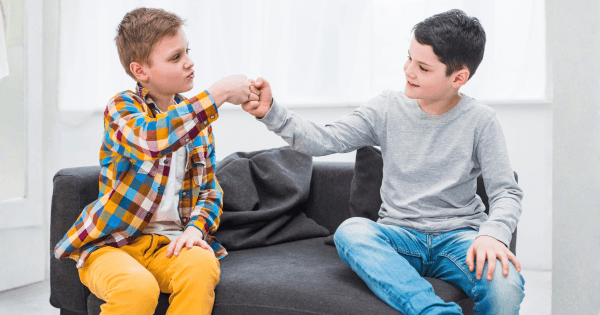
Parents can introduce these naturally through sibling conversations, games and family decisions. Role-playing different situations can make respectful communication feel familiar, not formal.
These small habits contribute significantly to social and emotional development, helping children communicate their needs, understand others and navigate differences with greater ease.
4. Let Home and School Set the Example
Children are keen observers. They notice how adults listen, negotiate and respond when opinions differ.
When parents model patience and curiosity, children see that disagreement can remain respectful. Schools can reinforce this by creating classrooms where children feel comfortable asking questions, sharing ideas and considering perspectives beyond their own.
Such environments can also help address child behavioural problems at their root by giving children practical tools to express emotions, resolve conflicts, and make themselves understood.
Conclusion: Help Their Voice Grow With Their Empathy
A confident child isn’t simply one who speaks up. It is a child who gradually learns to speak up and listen, stand by an idea and remain open to another, express themselves and make others feel heard.
At The Blue Bells School, everyday moments are an important part of growing up. Alongside academic learning, children need opportunities to develop communication, empathy and the confidence to engage with the world around them.
After all, childhood is full of different ideas. Our role is not to make every voice sound the same, but to help every child learn how to use their voice thoughtfully.